
Natasha's Foundation
Tanya Ednan-Laperouse OBE founded Natasha’s Foundation with her husband Nadim after their daughter Natasha died aged 15 from an allergic reaction to food.
From September 2026, perhaps for the first time, parents of children living with allergies will be able to drop them at the school gates without fear.
The new school year will mark a historic moment for the food allergy community.
New mandatory statutory guidance on allergy safety in schools comes into force in England, ending the current lottery where some schools take allergy seriously while others don’t.


Primary and secondary schools, and school nurseries, will be required to hold spare adrenaline auto-injectors (AAIs) on site in case a child has anaphylaxis, a life-threatening allergic reaction which can cause breathing difficulties and plummeting blood pressure.
All staff will receive obligatory allergy awareness and emergency response training at least once a year. And all schools will need to mount a robust, stand-alone allergy safety policy.
Families living with allergies have been calling for these measures, which could save lives, for years. And with around two children in every classroom now diagnosed with a food allergy (FSA 2016), they come not a moment too soon.
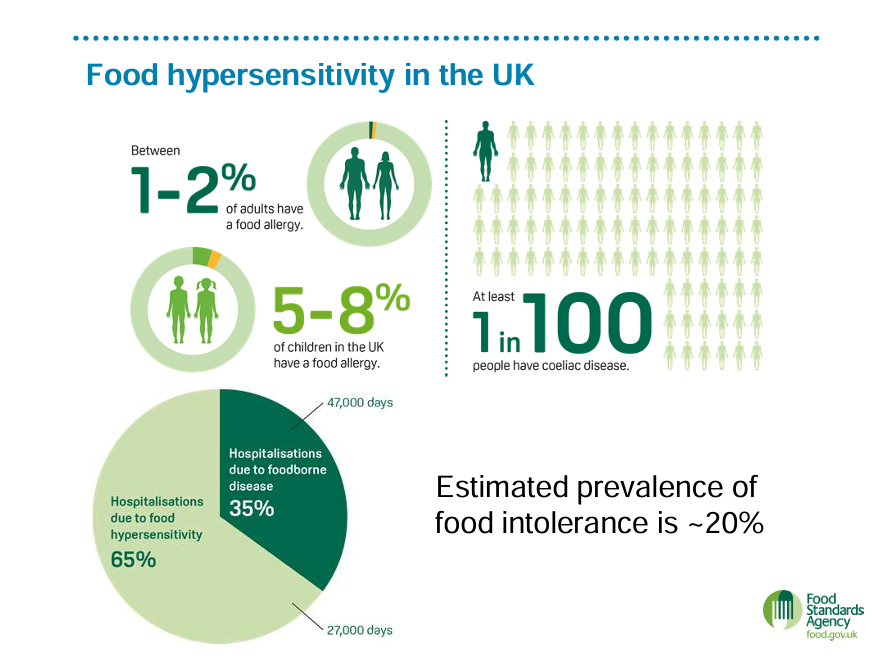
Source: FSA, 2018
In the UK, 40% of children have been diagnosed with an allergy. The four most common allergies in children are food allergy, eczema, asthma, and hay fever.
Almost 1 in 12 (8%) young children suffer from a food allergy.
Source: Allergy UK
This breakthrough comes fortified by the new Benedict’s Law. This makes it a legal requirement for schools to have strong allergy safety measures in place, in accordance with the new guidance.
The law honours Benedict Blythe, a 5-year-old boy who tragically died from anaphylaxis at school after being mistakenly given milk, to which he had a known allergy.
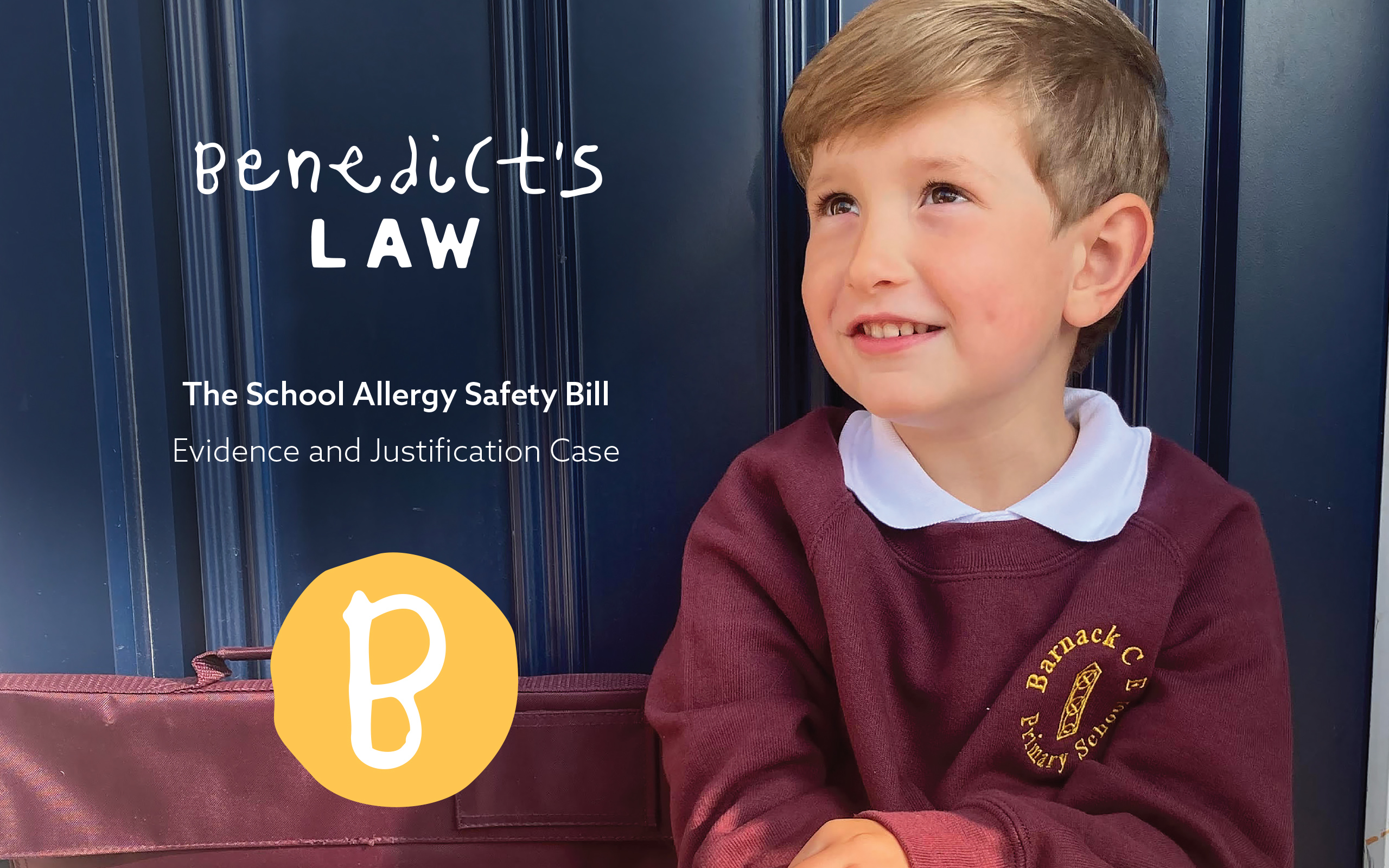
At Natasha’s Foundation we applaud the tireless campaigning of Benedict’s parents, and we are proud to have played a key role in shaping this vital guidance.
Sadly, Benedict’s death is not an isolated case. We know of other families who have lost their children to food allergy, and my heart goes out to each and every one of them.
Our own daughter Natasha died aged 15 from anaphylaxis after eating a baguette which failed to list sesame, to which she was allergic, on the label. Her death was entirely preventable.
Having multiple food allergies meant school was hard for Natasha at times.

Children and young people should be safe at school, enjoying nutritious food to fuel study and play without fear or anxiety. But for too long, it has been a place where pupils with food allergies are uniquely vulnerable.
Schools are one of the most common settings for first-time allergic reactions, including anaphylaxis, and 20% of all children with a food allergy will have a reaction in school (Muraro et al 2010).
Yet research by the NASUWT teachers’ union in collaboration with our Foundation found that 67 per cent of teachers have had no allergy awareness training. These powerful new policies will empower staff, protect young lives, and make children feel included.
Following Natasha’s death my husband Nadim and I fought for Natasha’s Law, which means all foods pre-packed for direct sale must now display proper allergen labelling.
During campaigning we launched Natasha’s Foundation in 2019, and Natasha’s Law was finally made mandatory in 2021.
All we ever wanted to do was keep Natasha safe. That’s what motivated us to launch Allergy School, a toolkit of free training, educational resources and support for nurseries, schools and out-of-school clubs.
At Natasha’s Foundation we understand how stretched teachers and school staff already are, and we want to help them meet the new statutory guidance completely for free.
Allergy School’s free allergy awareness and emergency response training aligns with the new guidance, and Benedict’s Law. We can offer free resources and templates to help schools with their allergy safety policy, and to request AAIs from pharmacies.
We have also extended our Allergy School resources to apply right through from early years settings to higher education centres, including universities, as well as to out-of-school clubs.
All pupils deserve to feel included, protected and safe at school.
This landmark law must become a turning point; helping to create a safer and fairer future for children and young people with allergies.
Managing allergens in your classroom
As a food and nutrition teacher, it can be a daunting task to safely manage allergens in the classroom.
For children with allergies, food lessons provide and opportunity to explore how to plan, prepare and cook allergy-safe, nutritious meals.
Having children with allergies in those classes also helps the wider student population recognise the challenges they face, and build awareness of ways they can take a role in keeping their friends safe.
There is support, training and resources available to help teachers face the challenges and create an inclusive, safe environment for all learners.
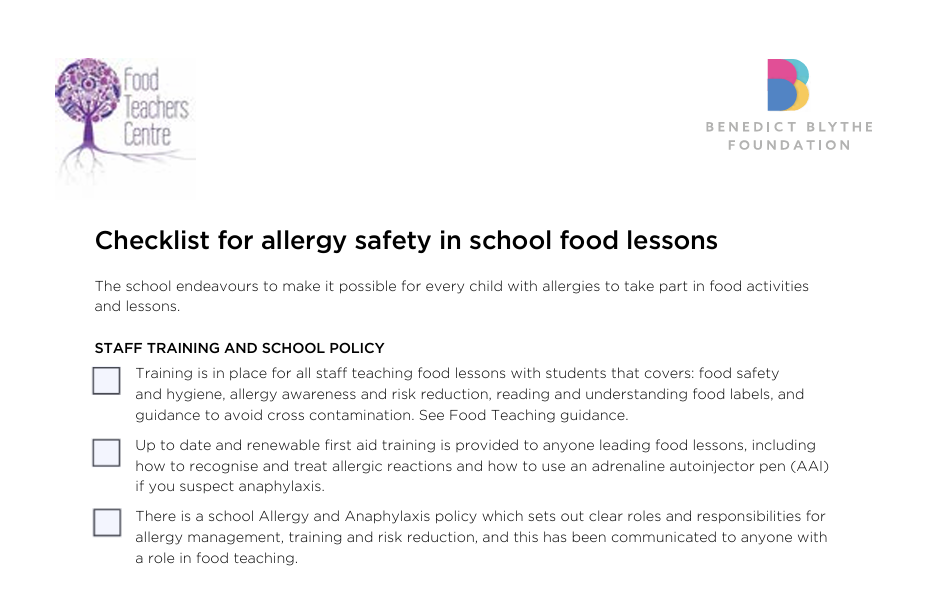
The Benedict Blythe Foundation in collaboration with the Food Teachers Centre has created a checklist to support teachers in planning their food lessons.
This checklist provides a practical guide to ‘what good looks like’ in managing allergies safely in food lessons, and should be used to ensure all measures are put in place to ensure children with allergies can access this important part of the curriculum.
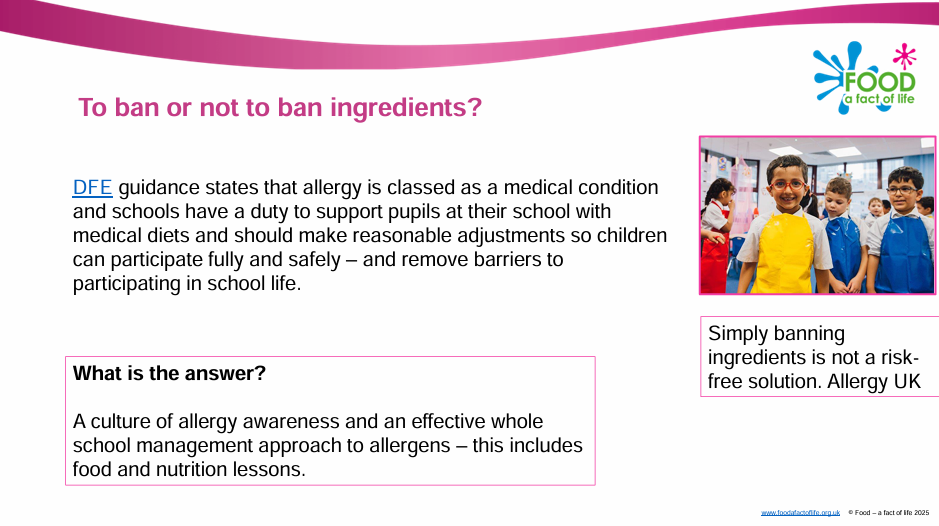
Food - a fact of life presented a webinar which explored adverse reactions to food and managing allergens in the classroom. The presentation is available for download, and the webinar can be accessed to catch up.
Other resources include:
- FSA allergen chart: A chart which can be used to identify the allergens in different dishes.
- Allergen menu planner: A chart which can be used to identify allergens in different dishes served in school or cooked by students in cookery lessons.
- Chef's recipe card: A worksheet tasking students with playing the role of a chef planning recipes and identifying allergens.
- Sample food labels: Sample labels for food products. These contain food safety and hygiene advice along with allergens. These can be edited to be used with recipes prepared in your cookery lessons.
- A guide to food hygiene and safety policies and risk assessments: A document outlining the process of writing risk assessments. This also includes sample risk assessments which can be edited to the specific needs of your students or classroom.
- Good food safety and hygiene practices: A document showcasing examples of good food safety and hygiene practices.
The characteristics of good practice in teaching food and nutrition documents give guidance on managing allergens in different educational settings.
To keep up-to-date with training:
- Register for Education News
- Register for Allergy School webinars
Is there something wrong with the page? Do you have a suggestion or would like to see something on this page?